Academics & Curriculum Study Programs
Bachelor of Industrial Engineering
Study Program’s Vision
To become an integrity-driven, professional, and entrepreneurially minded technological higher education institution at the Southeast Asian level.
Study Program’s Mission
- Produce Industrial Engineering graduates who are devout, have a national perspective, respect plurality, uphold law enforcement, national morality, and have noble character.
- To produce Industrial Engineering graduates who are honest, professional, innovative, and entrepreneurial through a learning process that adheres to national and international standards.
- Developing and producing knowledge and technology in the field of Industrial Engineering that is beneficial for improving the quality of life of the community, nation, and state through research and community service activities.
- Establishing cooperation and networks with industry, professional associations, government, and domestic and foreign universities to improve the quality of the three pillars of higher education.
Graduate Profile
1. Professionals who have the ability to design, repair, and install integrated systems in the manufacturing and service industries to produce high-performance, high-quality systems.
2. Professional personnel with integrity, capable of developing innovation
and technology-based entrepreneurship by applying industrial science and engineering skills in a sustainable manner.
Learning Outcomes
A. Attitude
Integrity: Fear of God Almighty, humanity, love for the homeland, deliberation, justice.
Professional: Able to contribute to the application, development, and discovery of science and technology, as well as possessing discipline, obedience,
and responsibility independently towards academic and legal norms, quality of life, and lifelong learning motivation.
Entrepreneurship: Able to demonstrate leadership, cooperation, risk-taking, opportunity utilization, and problem-solving skills.
B. Knowledge
P1 The ability to apply knowledge of mathematics, natural sciences and/or materials, information technology, and engineering to gain a comprehensive understanding of industrial engineering principles.
P2 The ability to apply modern engineering methods, skills, and tools required in industrial engineering practice.
P3 The ability to design and conduct laboratory and/or field experiments and analyze and interpret data to support industrial engineering decision-making processes.
P4 The ability to engage in lifelong learning, including access to relevant knowledge of current issues.
C. General Skills
KU1 Ability to analyze, plan, complete, and evaluate tasks or problems while considering the given constraints.
KU2 Ability to communicate in a professional context.
KU3 Ability to collaborate in multidisciplinary and multicultural teams.
D. Special Skills
KK1 Ability to identify, formulate, analyze, and solve complex problems in the field of industrial engineering.
KK2 The ability to design integrated systems that meet the necessary standards and various realistic multi-faceted constraints (e.g., technical, legal, economic, environmental, social, political, health and safety, sustainability) and involve various stakeholders, and identify and/or utilize the potential of local and national resources with a global perspective in the field of industrial engineering.
Career Prospects
1. Operational manager
2. Industrial product development manager
3. QC/QA manager
4. Production & inventory manager
5. Supply chain & logistics manager
6. Lecturer or Researcher
Study Program In Numbers
1. Established in: 2004
2. Current number of active students: 234
3. Number of alumni who have graduated: 1000++
5. Number of lecturers (including professors, permanent lecturers, and non-permanent lecturers): 19
6. Number of teaching staff: 8
7. How many classrooms: 5
8. How many laboratories: 9
9. Number of cooperation partners: 22
Scientific Journal
1. Journal Name : Jurnal Ilmiah Teknik Industri: Jurnal Keilmuan Teknik & Manajemen Industri
Accreditation: National Sinta 4
Link: https://journal.untar.ac.id/index.php/industri
2. Journal Name : Jurnal Mitra Teknik Industri
Accreditation: National Sinta 4
Link: https://journal.untar.ac.id/index.php/JMTI
Study Program’s Collaborations
- Universitas Indonesia
- Universitas Mataram
- Universitas Katolik Widya Mandala Surabaya
- Universitas Trisakti
- Yuan Ze University Taiwan
- Victoria University Business School, Melbourne
- Heilbronn University Germany
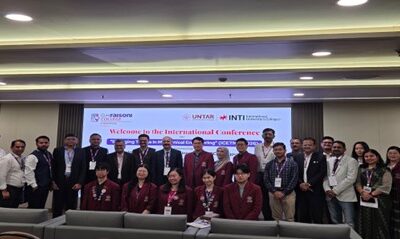
- Inti International College & University Malaysia
- Kasetsart University Thailand
- Chung Yuan Christian University Taiwan
- Naresuan University Thailand
- Badan Penyelenggara Kerja Sama Jurusan Teknik Industri se-Indonesia (BKSTI)
- Industrial Engineering and Operations Management (IEOM) Society
- Collaboration with 8 Industrial Engineering Departments of Private Universities in organizing the International Seminar on Industrial Engineering and Management (ISIEM)
- PT Soho Global Health Tbk
- PT Mayora Indah Tbk
- PT Teknotama Lingkungan Internusa
- PT Astra Honda Motor
- PT Citatah Tbk
- PT Baja Perkasa Sentosa
- PT Daikin Indonesia
- ISCEA Indonesia
Study Program’s Contact Person
Office phone number & extension (study program’s secretariat):
021-5672548 ext 351
Email: tin@untar.ac.id
Course
1st Semester
- Physics 1 & Practicum
- Mathematics
- Technical Drawing
- Introduction to Industrial Engineering and Systems
- Basic Chemistry
2nd Semester
- Statistics & Practicum
- Physics II
- Manufactur Process and Practicum
- Material Knowledge
- Human Anatomy and Physiology
- Linear Algebra
3rd Semester
- Engineering and Technology Management
- Multivariable Calculus
- Ergonomics & Work System Design and Practicum
- operations research
- Quality Management and Planning
- Product Development and TSI I Design Project
- Engineering Mechanics
4th Semester
- Facility Layout Engineering and TSI II Design Project
- Stochastic Method
- Production Planning and Control
- Religion Education
- Pancasila
- Citizenship Education
- Bahasa Indonesia
5th Semester
- Engineering Economics
- Cost Analysis and Estimation
- Technopreneurship and TSI III Design Project
- Research Methodology and Scientific Communication
- Modeling and Simulation
- Production Systems
- Introduction to Industrial Automation
- Elective Course I
6th Semester
- Practical Work
- Industrial Psychology
- Industrial Ecology
- Occupational Health and Safety
- Maintenance Management
- Elective Course II
- Elective Course III
Semester 7
- Supply Chain Engineering
- Integrated System Design
- Elective Course IV
- Elective Course V
8th Semester
- Final Thesis
Facility
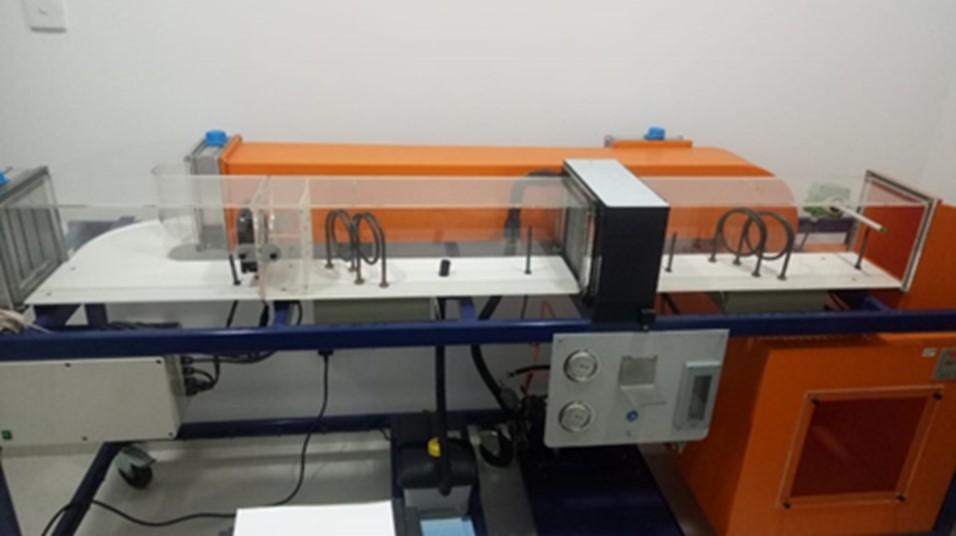
Armfield Recirculation Air Unit
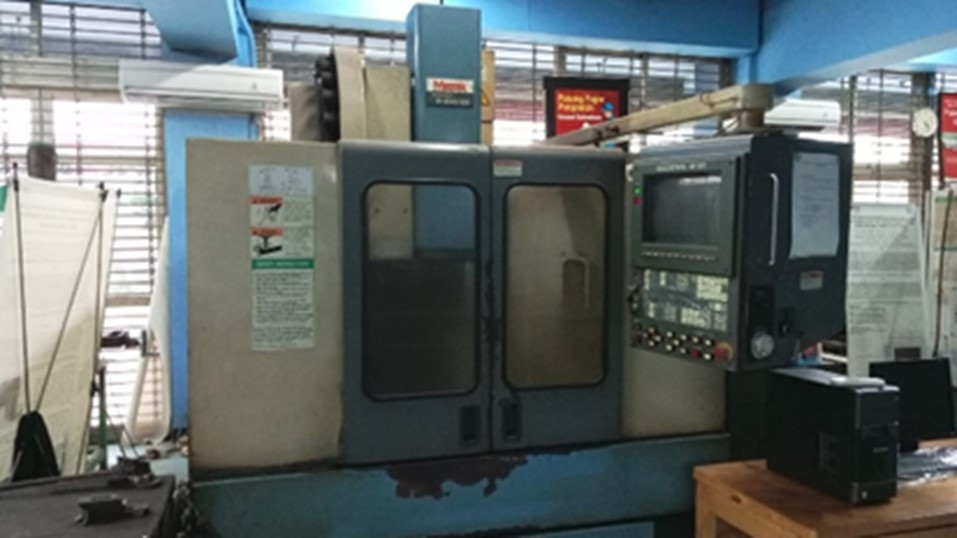
CNC Machining Center
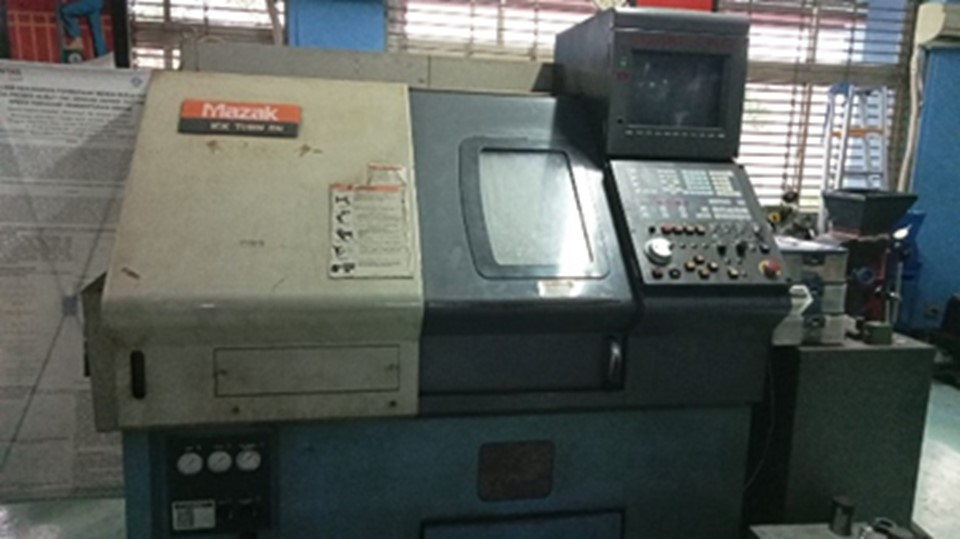
CNC Lathe
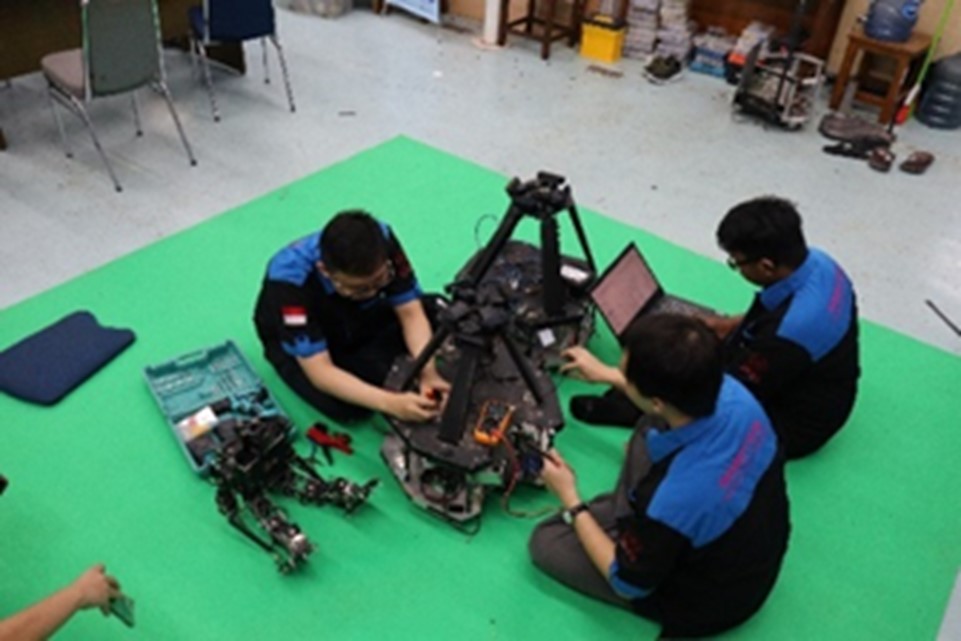
Workshop Robotic
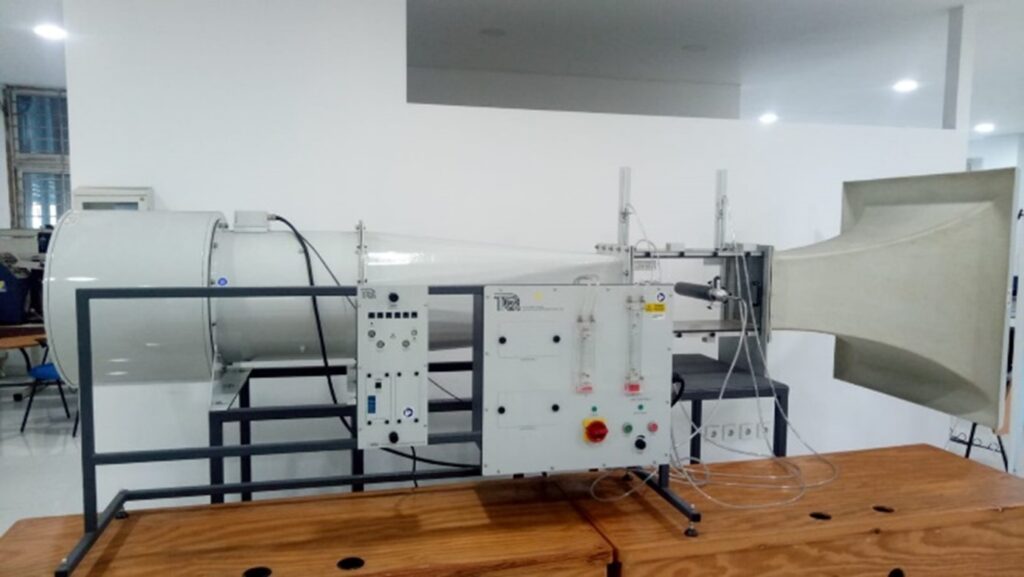
Wind Tunnel TecQuipment
Latest News